Introduction :>
Aave is one of the most influential decentralized finance (DeFi) protocols in the cryptocurrency ecosystem. Built on blockchain technology, Aave enables users to lend, borrow, and earn interest on digital assets without relying on traditional financial intermediaries such as banks. Since its launch, Aave has become a cornerstone of the DeFi movement, demonstrating how smart contracts can create transparent, efficient, and accessible financial services.
What Is Aave ?
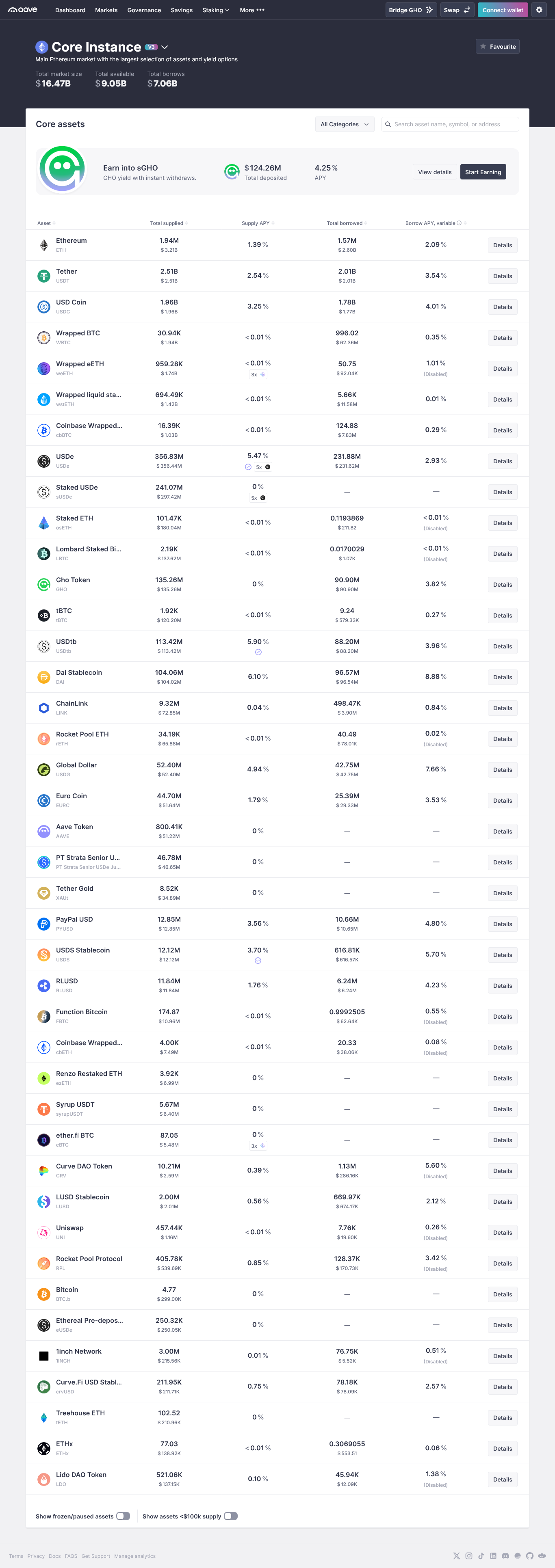
Aave is an open-source, non-custodial liquidity protocol that allows users to deposit cryptocurrencies into liquidity pools and earn interest or borrow assets against collateral. The platform operates primarily on the Ethereum blockchain, although it has expanded to multiple blockchain networks to improve scalability and accessibility.
The name "Aave" comes from the Finnish word for "ghost," symbolizing the protocol's vision of creating transparent and open financial infrastructure.
Founded by Stani Kulechov in 2017, Aave originally launched as ETHLend, a peer-to-peer lending platform. In 2020, the project rebranded as Aave and transitioned to a liquidity pool model, significantly increasing efficiency and liquidity.
How Aave Works ://
Lending :/
Users can deposit supported cryptocurrencies into Aave's liquidity pools. In return, they receive interest-bearing tokens that represent their deposits. Interest rates are determined algorithmically based on supply and demand within each pool.
Borrowing :/
Borrowers can access funds by depositing collateral that exceeds the value of the borrowed assets. This overcollateralization helps protect lenders from default risk. Borrowers can choose between variable and stable interest rate options depending on their financial strategy.
Smart Contracts :/
Aave relies on smart contracts to automate lending and borrowing activities. These self-executing programs eliminate the need for intermediaries and ensure transactions are conducted according to predefined rules.
Key Features ://
Flash Loans :/
One of Aave's most innovative features is the flash loan. Flash loans allow users to borrow funds without collateral, provided the loan is repaid within the same blockchain transaction. This capability has enabled advanced use cases such as arbitrage, collateral swaps, and refinancing.
Multiple Asset Support :/
Aave supports a wide range of cryptocurrencies, including stablecoins, major cryptocurrencies, and various tokenized assets. This diversity provides users with flexibility when managing their portfolios.
Governance :/
Aave is governed by its community through a decentralized governance system. Holders of the AAVE token can vote on protocol upgrades, risk parameters, and other important decisions. This governance model aligns with the broader DeFi philosophy of decentralization.
Cross-Chain Deployment :/
To reduce transaction costs and improve user experience, Aave has expanded beyond Ethereum to networks such as Polygon, Arbitrum, Optimism, and Avalanche. Cross-chain deployment allows users to access lending services across different blockchain ecosystems.
The AAVE Token
The AAVE token serves several purposes within the ecosystem:
1. Governance participation 2. Protocol security mechanisms
3. Fee management and incentives 4. Community-driven decision making
// Token holders play a crucial role in shaping the future direction of the protocol through governance proposals and voting processes.
Benefits of Aave ://
Accessibility :/
Anyone with a cryptocurrency wallet and internet connection can participate in Aave without requiring approval from a central authority.
Transparency :/
All transactions and protocol operations are recorded on public blockchains, allowing anyone to verify activity.
Continuous Availability :/
Unlike traditional banks, Aave operates 24 hours a day, seven days a week, enabling users to access financial services at any time.
Innovation :/
Features such as flash loans and decentralized governance showcase the innovative potential of blockchain-based financial systems.
Risks and Challenges ://
Despite its advantages, Aave faces several challenges:
Smart Contract Risk :/
Bugs or vulnerabilities in smart contracts could potentially lead to financial losses.
Market Volatility :/
Cryptocurrency prices can fluctuate significantly, increasing the risk of liquidation for borrowers.
Regulatory Uncertainty :/
As governments develop regulations for digital assets and DeFi platforms, Aave may face evolving legal and compliance requirements.
Liquidity Risk :/
Extreme market conditions can impact liquidity and borrowing costs across the protocol.
Aave's Impact on DeFi
Aave has played a major role in shaping the decentralized finance industry. Its innovations have influenced numerous other DeFi projects and contributed to the growth of decentralized lending markets. By enabling permissionless access to financial services, Aave demonstrates how blockchain technology can expand financial inclusion and reduce dependence on traditional intermediaries.
Conclusion ://
Aave stands as one of the leading decentralized lending protocols in the cryptocurrency ecosystem. Through features such as liquidity pools, flash loans, community governance, and cross-chain support, it has helped redefine how individuals interact with financial services.
While risks remain, Aave continues to be a significant force in the evolution of decentralized finance, illustrating the transformative potential of blockchain-powered financial infrastructure.

AI Website Generator